Nose
Are Korean Nose Jobs Right for You? Cost, Reviews and Methods, and When to Wait
Korean nose jobs suit many noses, but thick tip skin, a septum that already blocks breathing and a trip too short for the swelling are the usual reasons to wait or choose a smaller plan.
· 8 min read · Last updated
Edited by Im Young Min
In this article
- 01When your nose already breathes badly
- 02Is your skin too thick for the tip you have in mind?
- 03When the bridge you want needs more material than you have
- 04Can Korean nose jobs fit into a one-week trip?
- 05What can go wrong, and when is a second operation needed?
- 06Who should wait instead of booking
- 07What decides the cost of Korean nose jobs?
- 08What to send before you plan the trip
The short answer
Are Korean nose jobs right for your nose, or is this a case for waiting?
- Thick tip skin limits how narrow and defined a tip can look, whatever the technique.
- A septum that already blocks breathing should be examined before the outside shape is planned.
- A very high bridge on thin skin is where implant problems such as redness and exposure tend to start.
- The splint phase lasts about a week, but swelling can take up to a year to settle, so you fly home with a nose that is still changing.
- Teens still growing, people within a year of earlier nose surgery and anyone aiming to copy a specific face are usually better off waiting.
Read on before you book a flight or pay a deposit anywhere.
Profile
Im Young Min
Chief Director · Board-certified in Plastic Surgery
After this you will know what shapes the cost, what review threads claim versus what is medically true, and when thick skin, a blocked airway or a short stay should slow you down.
Hello, I'm Dr. Im Young Min, Chief Director and a board-certified plastic surgeon.
At VG Plastic Surgery, an ear, nose and throat specialist works alongside the plastic surgeons, so your airway is looked at as part of the same rhinoplasty plan. I trained at Seoul St. Mary's Hospital, where I am also an adjunct professor of plastic surgery.
I wrote this because many people assume a Korean nose job is a standard package that fits any nose and any holiday.
In short, Korean nose jobs suit many people, but thick tip skin, a septum that already blocks your breathing, or a trip too short for swelling to settle can change the plan.
Send your nose photos and travel dates on WhatsApp
When your nose already breathes badly
One side that is often blocked, snoring that started after an old injury, or a septum that visibly leans are reasons to examine the inside before shaping the outside. Raising a bridge or narrowing a tip can make a borderline airway feel worse if the internal structure is left unassessed.
This is where the setup of the clinic matters. An ENT specialist reviews nose cases with the plastic surgeons, and a deviated septum or a narrow nasal valve is assessed alongside the shape. When the septum needs treatment, it is examined and treated as part of the operation. Kim Han Gyeol, the ENT specialist who joins the rhinoplasty centre, is responsible for the septum and the airway.
The details that make a surgeon hesitate are small ones people leave out: sleeping with the mouth open, using a decongestant nasal spray most nights, or a nose that "just feels stuffy" every winter. Those details can change the plan more than the photo does, so put them in your first message.
Is your skin too thick for the tip you have in mind?
Sometimes, yes. Thick, oily tip skin hides the cartilage underneath, so even a well-built tip framework shows as a softer, rounder outline than the reference photo you saved.
Risks and side effects to know
A review of Asian rhinoplasty by Ishii in Plastic and Reconstructive Surgery Global Open (2014) describes features surgeons commonly meet in East Asian noses: thicker skin and soft tissue, smaller and weaker tip cartilages, and a lower bridge. That combination explains why a sharply defined, narrow tip is harder to reach on some noses, and why forcing it with extra structure under tight skin carries risks of its own.
If the tip skin is thick, the realistic goal becomes better projection and a cleaner outline; a pinched, narrow point is unlikely. There is more on this in why skin sets the limit on the tip.
If the width that bothers you sits in the nostrils, that is a separate question, covered in when nostril reduction helps a wide nose.
When the bridge you want needs more material than you have
A higher bridge needs something to build with: an implant, your own cartilage, or both. The higher the target and the thinner the skin covering it, the more the choice of material matters for safety over the years.
Bridge height is the change most people associate with Korean nose jobs. The Ishii review notes that implants are widely used in Asian rhinoplasty and that infection, displacement and extrusion are recognised complications, which is part of why surgeons often turn to the patient's own cartilage, taken from the septum, the ear or the rib.
Each source has a limit. Septal cartilage is finite, and after an earlier operation there may be little left. Ear cartilage is curved and soft. Rib cartilage gives more volume but adds a second surgical site and a longer recovery. The request I find hardest to agree to as asked is a very tall bridge on thin skin, because thin skin stretched over a high implant is where redness and exposure tend to start.
Can Korean nose jobs fit into a one-week trip?
The operation and the first check often fit; the finished result does not. The American Society of Plastic Surgeons describes a splint for roughly the first week, while subtle swelling can take up to a year to settle fully.
That gap is the core travel problem. You fly home with a nose that is still changing, and the person who watches it over the following months is mostly you, in the mirror, far from Seoul. The NHS page on nose reshaping describes the early weeks plainly: bruising and swelling around the eyes, a blocked feeling in the nose, and time off before you go back to work.
How many days you need in Seoul depends on what is done. A tip-only change and a combined septum, bridge and tip operation are different trips. For stay lengths by type of operation, see what a nose job changes and how long people stay.
Travellers on a tight schedule tend to miss three things:
- a return flight you can move by a day or two if the surgeon wants another look;
- no plans for sun-heavy sightseeing, crowds, or glasses resting on the bridge in the first days;
- time off at home for bruising that is still visible after you land.
If your leave is fixed, send those dates on WhatsApp together with one side photo of your nose. The surgeon reviews whether the change you are asking for fits that window, or whether a smaller plan or a longer stay makes more sense for your trip.
Send your nose photos and travel dates on WhatsApp
Say you have a week of leave, a fairly wide nose tip and thick skin, and you want a sharp, defined tip. I would first ask whether the skin can show that definition at all, because thick skin often hides fine work and swells for longer. I would also ask whether you breathe freely through both sides. If the answer is no, the airway comes first and the schedule has to allow for it. In a case like this, I might suggest a more modest change that your skin can show, or a longer stay, rather than forcing a sharp tip into a short week.
What can go wrong, and when is a second operation needed?
Most problems are temporary: swelling, bruising, a blocked nose and numbness at the tip. Less often, the shape heals differently from the plan, breathing gets worse, or an implant becomes infected or shifts, and some of these need a revision operation.
The NHS lists the risks to hear before rhinoplasty, including breathing difficulty, nosebleeds, numbness, damage to the septum and a nose that does not look the way you expected. The Ishii review adds the implant-specific ones described above. These are the reasons a consultation spends time on your airway, your skin and your expectations as well as on the bridge height.
Revision is generally not planned until the swelling has had time to settle, often many months later, which for someone living abroad means a second trip. That is the real cost of correcting Korean nose jobs after the fact, and the main reason to turn down plans that sit close to the edge of what your skin and cartilage can carry. Whether you are a candidate at all is decided at the in-person exam in Seoul.
If you are judging risk from other people's results, how to read nose job photos by angle and timing explains what a single photo leaves out.
General anaesthesia far from home is the other risk people ask about. Three board-certified anesthesiologists work here full time. One of them watches your blood pressure, pulse and breathing from the first injection until you are awake again, and they do not perform cosmetic surgery.
Who should wait instead of booking
| What the exam or conversation shows | What it usually means for the plan |
|---|---|
| Septum leaning, one side blocked | Airway assessed with the ENT specialist first; the shape plan follows |
| Thick, oily tip skin | Projection and outline are realistic; a very narrow tip is unlikely |
| Thin skin, very high bridge requested | A lower target or own-cartilage options are discussed |
| Nose surgery less than a year ago | Wait for the swelling to settle before re-planning |
| A fixed trip of only a few days | A smaller plan now, or a later trip with more days |
| The goal is a celebrity's nose | A conversation about your own face first; surgery may not answer it |
Korean nose jobs are planned around the nose you have, and the last row matters more than it looks. When the main wish is to stop thinking about one feature, or when several surgeons have already called the change small, another operation rarely settles that feeling. Tell the surgeon about blood-thinning medicines and supplements too, since they affect bleeding and bruising.
What decides the cost of Korean nose jobs?
The cost depends on what your nose needs, not on a single standard operation. The method matters: a small change to the tip is a different operation from raising the bridge with your own cartilage. The amount of work matters too, as does whether the airway is corrected in the same operation. The type of anaesthesia and the number of days you can stay in Seoul for checks also play a part. If you have had surgery before, revision work changes the plan again. To get the figure for your own nose, send a front and a side photo on WhatsApp and ask for it.
What to send before you plan the trip
For Korean nose jobs planned from abroad, four things make the first review useful: a front photo, a side photo and a photo from below in daylight without makeup; any earlier nose surgery or injections and roughly when; breathing symptoms such as one-sided blockage or nightly spray use; and the dates you could be in Seoul.
Send a front photo and a side photo of your nose in daylight on WhatsApp, along with the dates you can be in Seoul. Then ask one question: would my nose and my schedule suit surgery now, or should I wait? One photo is enough to start, and you can ask before booking anything. When you come to the clinic at 635 Nonhyeon-ro, Gangnam-gu, Seoul, I will examine your nose and recommend what fits you.
Related pages:
Nose before & after — more cases
Real patients from our archive, all photographed 3 months after surgery. Tap a case to compare it full size.
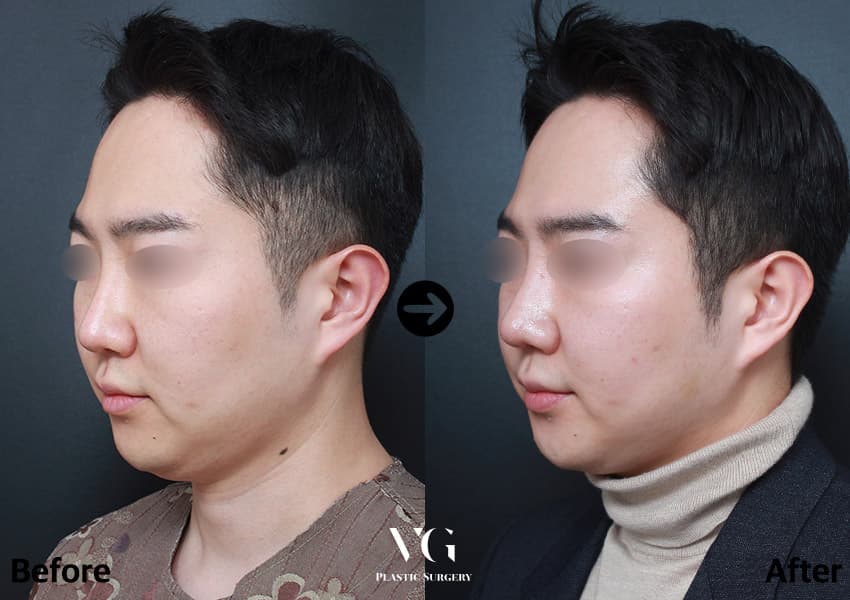
Male Rhinoplasty3 months after surgery
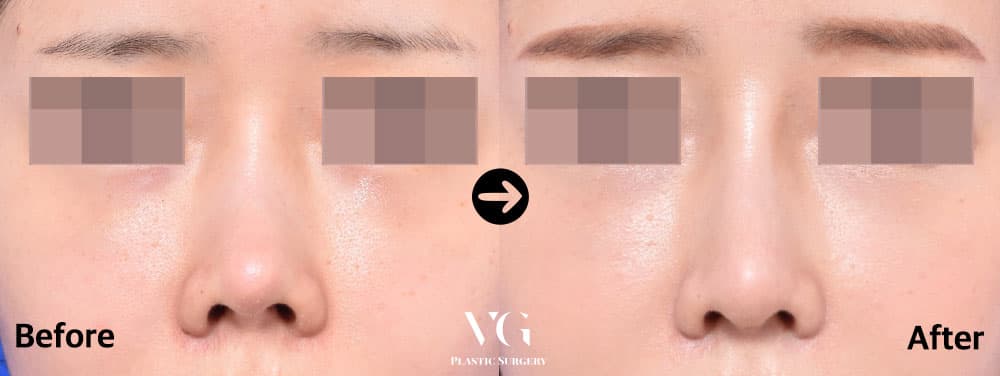
Revision Rhinoplasty3 months after surgery
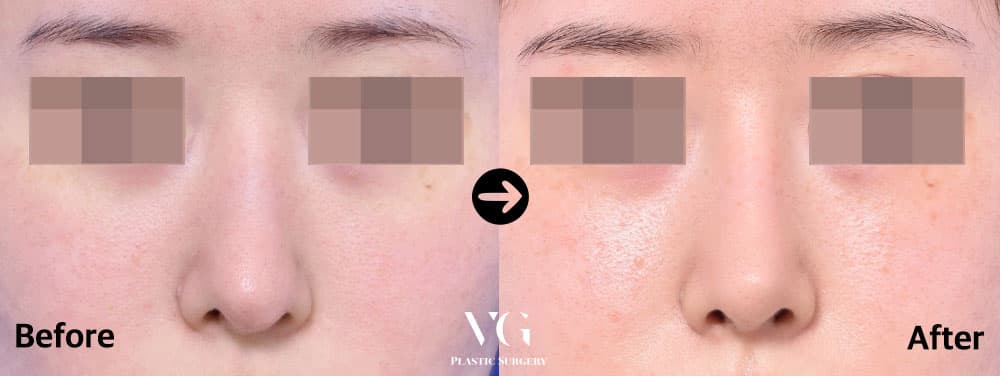
Revision Rhinoplasty3 months after surgery
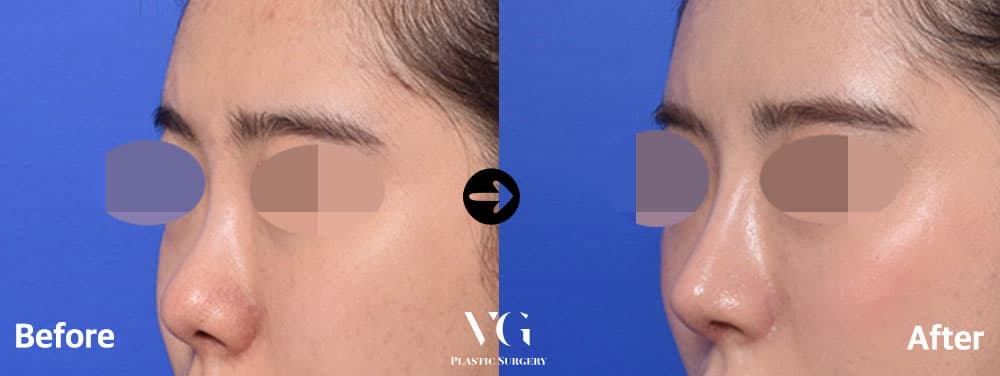
Rhinoplasty3 months after surgery
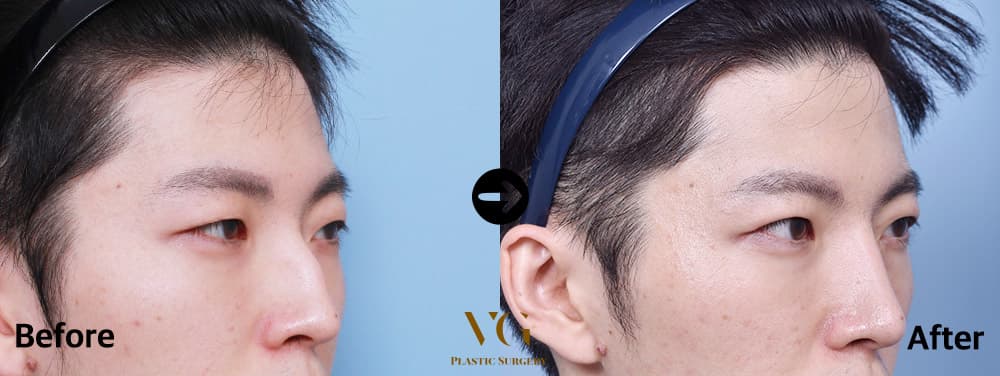
Male Rhinoplasty3 months after surgery
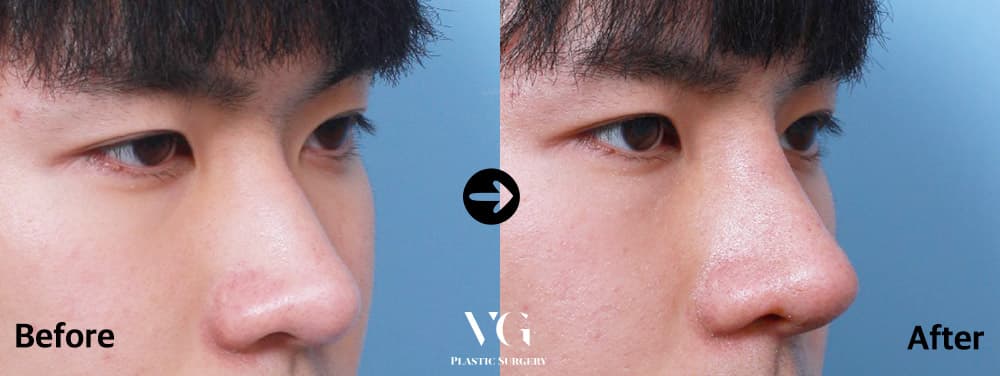
Male Rhinoplasty3 months after surgery
FAQ
Questions patients ask
How soon can I fly home after rhinoplasty in Seoul?
There is no single date that fits everyone. The American Society of Plastic Surgeons describes the splint and first recovery as roughly the first week, and many surgeons want to see the nose after the splint comes off before you fly. Your surgeon sets the date after seeing what was done and how the first days went.
Can a deviated septum be corrected in the same operation as a nose job in Korea?
It can be planned into the same operation. At VG Plastic Surgery an ENT specialist practises alongside the plastic surgeons, and a deviated septum or narrow nasal valve is examined and treated as part of the operation. Mention any breathing trouble in your first message so it is part of the plan from the start.
Who gives the anaesthesia during rhinoplasty at VG Plastic Surgery?
Three board-certified anesthesiologists work at the clinic full time, and one is dedicated to each operation. They watch blood pressure, pulse and breathing from the first injection until you wake up. They do not perform cosmetic surgery, so the surgeon only operates.
When will I see the final shape of my nose?
Most of the visible swelling goes down over the first weeks, but the American Society of Plastic Surgeons notes that subtle swelling can take up to a year to resolve. The tip usually takes longest, especially with thick skin. Judging the result early, from a phone camera, tends to be misleading.
I already had rhinoplasty in another country. Can I have another one in Korea?
It may be possible, but the swelling from the first operation should settle first, which often means waiting many months. Earlier surgery can leave less septal cartilage to work with, so ear or rib cartilage may come into the discussion. Bring the operation records and any implant details you have.
Can a nose job be reversed if I don't like it?
Not simply. An implant can be removed, but skin and tissues have changed around it, and reshaped cartilage cannot be put back the way it was. That is a strong reason to choose a measured plan the first time.
Sources
This article explains general medical information. Whether surgery suits you, and which method, is decided only after a consultation with the surgeon.
Written by
Im Young Min
Chief Director · Plastic Surgery
- Ph.D. in Medicine
- Internship and residency, Seoul St. Mary's Hospital
- Board-certified plastic surgeon, Seoul St. Mary's Hospital
- Adjunct professor of plastic surgery, Seoul St. Mary's Hospital
- Former director, Topface Plastic Surgery
Next step
Send two photos. Get a surgeon’s answer.
Front and side, natural light, no filter. Dr. Im Young Min reviews them and tells you which method fits and how many days to stay in Seoul.
International patients pay the same surgical fee as Korean patients. Pricing policy
Keep reading
Nose
Rhinoplasty Cost in South Korea in Rupees: What Changes It for a Flat Nose or Crooked Septum? Reviews, Methods and Recovery
There's no honest rupee figure for a nose nobody has examined. The cost follows the method, septum work, revision, anesthesia time and days in Seoul; send photos on WhatsApp to ask about yours.
Im Young Min ·
Nose
What Decides the Cost of Rhinoplasty in South Korea? Reviews, Methods and Recovery
There is no single price for a nose job in Korea: the method, the cartilage source, septum work, revision status and anesthesia set the figure for your nose.
Im Young Min ·
Nose
How Much Does a Nose Job Cost in Korea? Four Cost Drivers, Reviews, Methods and Recovery
A nose job in Korea is priced from four parts: the scope of the change, the building material, any breathing work and the anesthesia. Foreigners pay the same surgical fee as Korean patients, with a written estimate.
Im Young Min ·