Nose
Looking for the Best Rhinoplasty Surgeon in Korea? Cost, Methods and Reviews Explained
No official ranking names the rhinoplasty surgeon in Korea. Check four things instead: board certification, who assesses your septum and airway, who runs your anesthesia, and follow-up once you fly home.
· 7 min read · Last updated
Edited by Im Young Min
In this article
- 01Rankings measure visibility, not fit
- 02Which credentials can you check before booking a flight?
- 03Who examines the inside of your nose?
- 04Who is watching your breathing while you're asleep?
- 05What decides the cost of rhinoplasty in Korea?
- 06Risks, side effects and when waiting makes sense
- 07Plan the follow-up before you book the flight home
The short answer
It's worth reading on before you book a flight or pay a deposit.
- No official ranking exists, so check the surgeon's board certification and training hospital yourself.
- Ask who examines the inside of your nose; at VG Plastic Surgery an ENT specialist works in the rhinoplasty centre.
- Ask who runs your anesthesia; three anesthesiologists work here full time and do not operate.
- Swelling settles over months, so plan your follow-up at home before you book the flight back.
- Leave Seoul with your operative details and medication list in writing for your doctor at home.
After reading, you will know what the cost depends on, how the procedure is planned, what review threads claim versus what is medically true, and which three checks help you choose a surgeon from abroad.
Profile
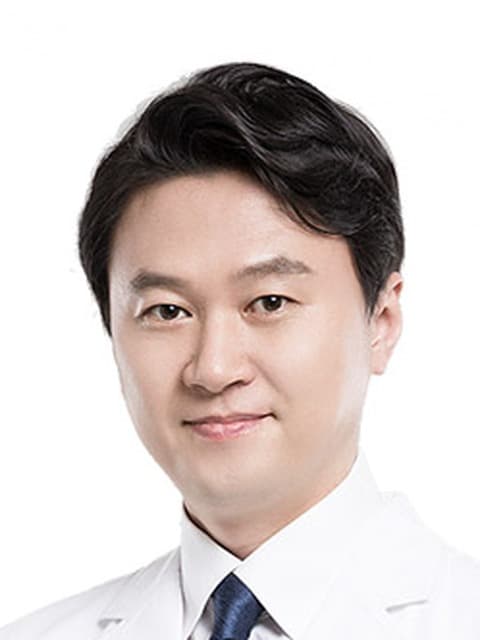
Im Young Min
Chief Director · Board-certified in Plastic Surgery
Hello, I'm Dr. Im Young Min, Chief Director and board-certified plastic surgeon at VERYGOOD.
At our clinic, an ENT specialist reviews rhinoplasty alongside the plastic surgeons, so your septum and airway are assessed in the same plan as the shape. Our anaesthesia is handled by anesthesiology specialists.
I write this because many people assume a ranking or a star count tells them who is best, when it mostly shows who is most visible online.
The short answer: no list can name one surgeon who is best for you. Check board certification, who assesses your airway, and who looks after your anaesthesia.
Send a front and side photo of your nose on WhatsApp
Rankings measure visibility, not fit
Any list that answers "best rhinoplasty surgeon in korea" tells you who advertises or posts most often. It can't tell you whether a surgeon is right for a nose with thick tip skin, a crooked septum, an earlier operation, or a bridge you want raised only slightly.
A review of Asian rhinoplasty in Plastic and Reconstructive Surgery Global Open describes thicker skin and smaller cartilage as recurring features, which is why tip refinement and bridge augmentation often rely on cartilage grafts or implants and why skin thickness limits how sharp a tip can look. We go into that limit in why your skin sets the limit on the tip. If you've had surgery before, the plan starts from what the first operation left, covered in revision rhinoplasty in Korea.
Which credentials can you check before booking a flight?
You can verify three things from home: board certification in plastic surgery, the hospital where the surgeon trained, and which procedures the surgeon actually covers. If any of these is missing or vague, ask before you go further.
The NHS guidance on nose reshaping tells UK readers to check a surgeon's registration and specialist training first. The same habit works in Seoul, including when you're weighing the best rhinoplasty surgeon in korea. At this clinic, four board-certified plastic surgeons divide the centres between them, and each one's centre and training hospital are published under their own name on the doctors page. The full step-by-step for checking who actually operates is in how to check who will operate on you.
| Question to ask | Why it matters | A clear answer sounds like |
|---|---|---|
| Is the surgeon board-certified in plastic surgery? | Training in nose structure, not only cosmetic courses | A named specialty and a named training hospital |
| Which centre is the surgeon part of? | Nose work is a narrow field | "Nose centre" listed under the surgeon's name |
| Who examines the septum and airway? | Shape and breathing share the same cartilage | A named ENT specialist, or a plan for referral |
| Who runs the anesthesia? | General anesthesia needs its own specialist | An anesthesiologist on staff for your operation |
| Open or closed approach, and why? | The approach follows the job, not habit | A reason tied to your tip or bridge |
| What happens after I fly home? | Swelling settles over months | Written notes and a way to send updates |
The open-versus-closed question is worth asking even if you don't care about the answer, because the reasoning shows you how the surgeon thinks. Our comparison of closed rhinoplasty and the open approach covers what each incision allows.
Who examines the inside of your nose?
Ask this one early. Many people come for a tip or bridge and only mention later that one nostril has felt blocked for years, and a deviated septum or a narrow nasal valve changes the plan.
The septum is also the cartilage surgeons most often borrow for grafts. If it's crooked, the surgeon needs to know before deciding how much can be taken, where a strut goes, and whether the airway will be straighter or tighter afterward. In general, a surgeon looks at tip support by pressing gently on the tip, checks skin thickness by how it moves over the cartilage, and looks inside the nose for septal deviation and swollen turbinates.
At VG Plastic Surgery, rhinoplasty is reviewed with an ENT specialist, Dr. Kim Han Gyeol, who completed otolaryngology residency at Samsung Medical Center, Sungkyunkwan University.
Say you are in your thirties, you have a small bump on the bridge, and the left side of your nose feels blocked when you breathe in at night. Before talking about the method, I would want to know why that side is blocked. If the septum is bent, shaping only the outside could leave the breathing problem in place, so the ENT specialist would examine the inside of your nose first. Only then would we decide how much to change on the outside and which approach suits your anatomy. The order matters more than the method's name.
Who is watching your breathing while you're asleep?
An anesthesiologist should be, and you can ask by name. Rhinoplasty is usually done under general anesthesia or deep sedation, and the person watching your blood pressure, pulse and breathing should not be the person holding the scalpel.
Three board-certified anesthesiologists work at this clinic full time, and one is dedicated to every operation. They don't perform cosmetic surgery. Their job runs from assessing your underlying conditions in advance to the moment you wake in recovery.
This matters more after 40. If you take blood pressure tablets, blood thinners, diabetes medicine or supplements such as fish oil, list them all in your first message and bring the packaging to Seoul. Some need to be paused before surgery, and only your prescribing doctor and the anesthesiologist together should decide that.
What decides the cost of rhinoplasty in Korea?
The cost depends on what your nose needs, not on a standard package. The main factors are the method (whether only the shape changes or the septum and airway are also corrected), how much needs to be done and in which areas, and whether your own cartilage is enough or more material is needed. Anaesthesia type, how many days you stay in Korea, and how follow-up checks are arranged also change the total. A revision after an earlier operation is usually planned differently from a first operation. To get the figure for your case, send a photo of your nose from the front and side on WhatsApp and ask for an estimate based on it.
Risks, side effects and when waiting makes sense
The common effects are swelling, bruising around the eyes and a blocked feeling for the first days. The NHS lists less common problems that include bleeding, infection, breathing difficulty, a result that looks uneven, and the need for a second operation.
According to the American Society of Plastic Surgeons, an external splint is usually worn for about the first week, much of the swelling fades over the following weeks, and the final shape of the tip can take up to a year to settle.
Thick tip skin tends to stay swollen longer, so a tip that looks heavy at one month isn't a verdict. Healing speed and final definition differ from person to person, which is why a firm promise about how your nose will look is a reason to ask more questions.
Waiting is reasonable if a cold, sinus infection or allergy flare is active, if a medical condition isn't controlled yet, if you can't stay long enough for splint removal, or if what you want is a nose from a photo rather than a better version of your own. Whether your nose should be operated on at all is decided at the in-person exam.
If blocked breathing, an earlier operation or a medication list is the part you're unsure about, send that on WhatsApp first: the photo of your nose plus your medication list, or the year and type of your previous surgery. You'll get a reply there, and you'll know which of these points to raise in consultation before you choose dates.
Send a front and side photo of your nose on WhatsApp
Plan the follow-up before you book the flight home
The U.S. CDC advises medical travelers to arrange follow-up care at home before leaving and to carry copies of their records. It also suggests asking the surgeon about flying soon after surgery, because of the risk of blood clots. How many days you stay in Seoul is set in consultation, around splint removal and your own healing.
Before you leave the clinic, ask for these in writing so your doctor at home can read them:
- what was done to the bridge, tip and septum, and which cartilage or implant was used
- the medicines you were given, with generic names and doses
- which symptoms are normal swelling and which need a doctor the same day
- how to send photos or questions to the clinic once you're home
It also helps to book a general practitioner or ENT appointment near home for the second or third week.
If your trip mixes a nose plan with something else, our page on where the bridge starts and what raises it helps you separate the bridge question from the tip question before the consultation.
Send one photo of your nose from the front and one from the side on WhatsApp, plus a line on whether either side feels blocked. Then ask: "Which surgeon would I see, and would the ENT specialist be part of my plan?" One photo is enough to start, and you can ask before booking anything. When you come to Seoul, I examine you in person and recommend what fits your nose and your breathing.
Related pages:
Nose before & after — more cases
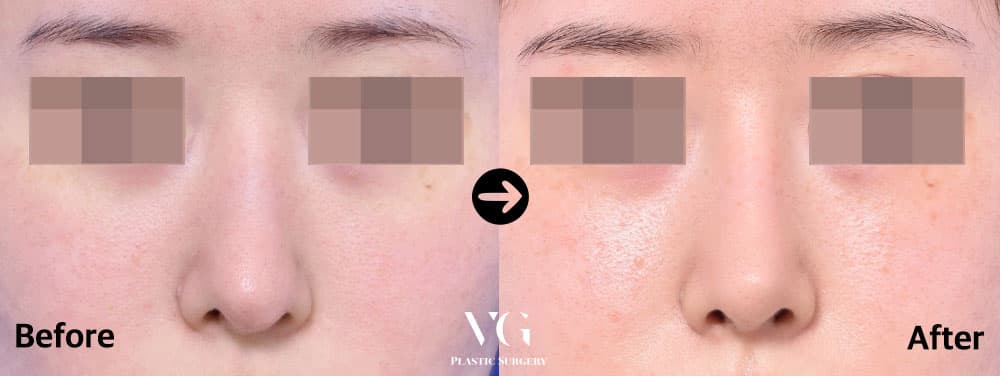
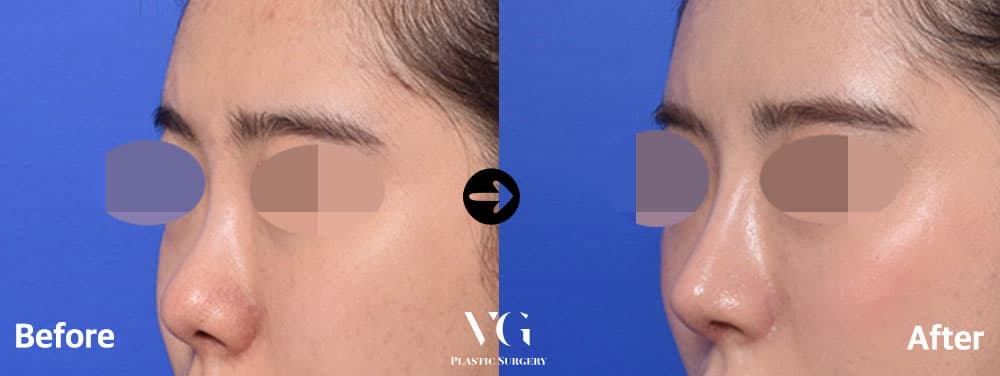
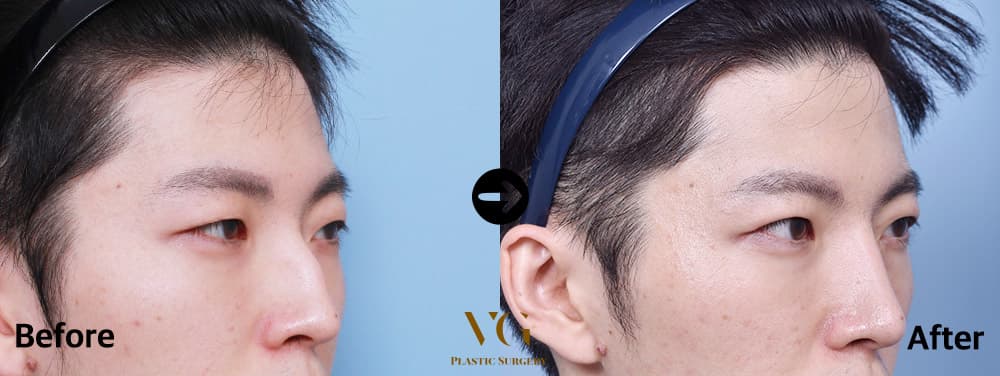
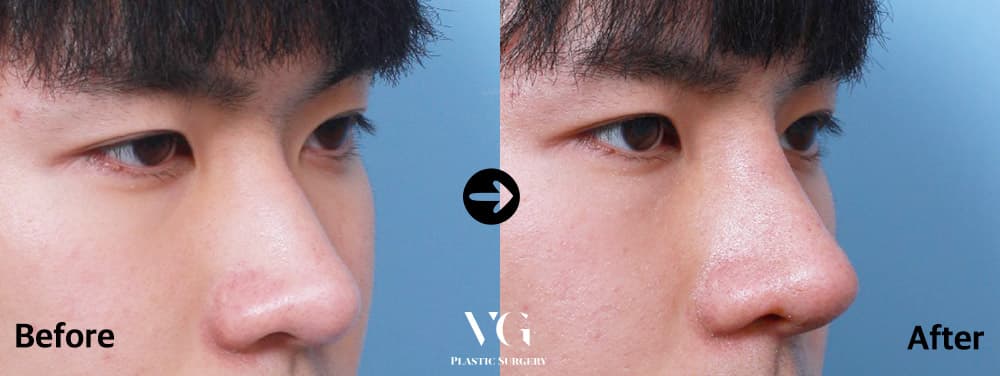
Real patients from our archive, all photographed 3 months after surgery. Tap a case to compare it full size.
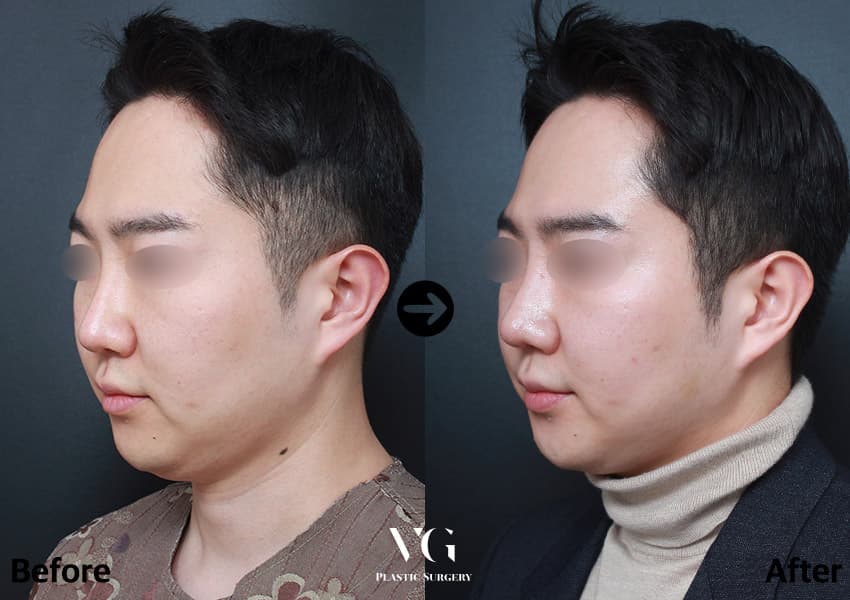
Male Rhinoplasty3 months after surgery
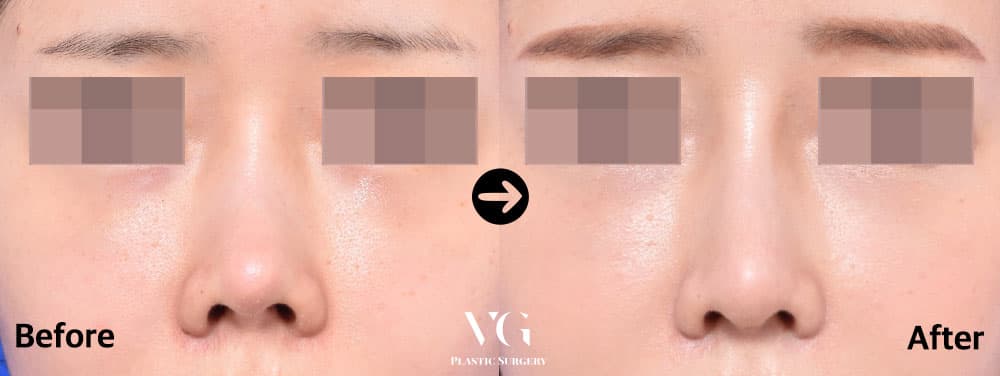
Revision Rhinoplasty3 months after surgery
Revision Rhinoplasty3 months after surgery
Rhinoplasty3 months after surgery
Male Rhinoplasty3 months after surgery
Male Rhinoplasty3 months after surgery
FAQ
Questions patients ask
Can I see the surgeon's credentials before I travel?
At VG Plastic Surgery, each surgeon's training hospital, board certification and centre are published under their own name on the doctors page. Look them up before you book, and ask on WhatsApp which of them sit in the nose centre.
Does an ENT specialist really change a cosmetic nose operation?
It can. The septum supports the tip and is the usual source of graft cartilage, and a deviated septum or narrow valve affects breathing. Having an ENT specialist in the rhinoplasty plan means breathing and shape are assessed together.
How long does swelling last after rhinoplasty?
Most visible swelling and bruising fade over the first few weeks, but the American Society of Plastic Surgeons notes the tip can take up to a year to settle. Thicker skin usually holds swelling longer.
I'm over 50 and on blood pressure medicine. Can I still have nose surgery in Seoul?
Age alone isn't the deciding factor; how well your conditions are controlled matters more. List every medicine and supplement in your first message, and bring the packaging. The anesthesiologist assesses underlying conditions before surgery, and the in-person exam decides.
Sources
This article explains general medical information. Whether surgery suits you, and which method, is decided only after a consultation with the surgeon.
Written by
Im Young Min
Chief Director · Plastic Surgery
- Ph.D. in Medicine
- Internship and residency, Seoul St. Mary's Hospital
- Board-certified plastic surgeon, Seoul St. Mary's Hospital
- Adjunct professor of plastic surgery, Seoul St. Mary's Hospital
- Former director, Topface Plastic Surgery
Next step
Send two photos. Get a surgeon’s answer.
Front and side, natural light, no filter. Dr. Im Young Min reviews them and tells you which method fits and how many days to stay in Seoul.
International patients pay the same surgical fee as Korean patients. Pricing policy
Keep reading
Nose
Rhinoplasty Cost in South Korea in Rupees: What Changes It for a Flat Nose or Crooked Septum? Reviews, Methods and Recovery
There's no honest rupee figure for a nose nobody has examined. The cost follows the method, septum work, revision, anesthesia time and days in Seoul; send photos on WhatsApp to ask about yours.
Im Young Min ·
Nose
What Decides the Cost of Rhinoplasty in South Korea? Reviews, Methods and Recovery
There is no single price for a nose job in Korea: the method, the cartilage source, septum work, revision status and anesthesia set the figure for your nose.
Im Young Min ·
Nose
How Much Does a Nose Job Cost in Korea? Four Cost Drivers, Reviews, Methods and Recovery
A nose job in Korea is priced from four parts: the scope of the change, the building material, any breathing work and the anesthesia. Foreigners pay the same surgical fee as Korean patients, with a written estimate.
Im Young Min ·