Nose
African American Rhinoplasty Korea: Methods, Cost and Follow-Up From Home
For african American rhinoplasty Korea, plan the trip around the splint week and the first check-ups, and settle who handles problems back home before you book flights.
· 7 min read · Last updated
Edited by Im Young Min
In this article
- 01What does the trip actually look like, day by day?
- 02Why does your skin and nasal structure change the plan?
- 03What should you settle before booking flights?
- 04What happens once you are back home?
- 05What decides the cost of rhinoplasty for this type of nose?
- 06What are the risks specific to this kind of nose?
- 07Is the eye area part of the same conversation?
- 08Your next step
The short answer
Are you weighing african American rhinoplasty Korea and wondering how thick skin and a wider nasal base change what is possible and how long you need to stay?
- Build the trip around the splint week and the first check-ups, not around the operation day alone.
- Thicker skin and a wider base change what a surgeon can realistically refine, so bring clear photos and talk goals early.
- Ask who you contact, and in which language, if swelling or a symptom worries you at home.
- Long flights soon after surgery carry their own risks, so ask when you may fly.
- Rhinoplasty is planned in person: a photo starts the conversation, the exam sets the plan.
It is worth reading on before you book flights or pay a deposit anywhere.
Profile
Im Young Min
Chief Director · Board-certified in Plastic Surgery
After reading you will know the methods that suit this kind of nose, what decides the cost, how many days to plan in Seoul, and how follow-up works once you are home.
Hello, I'm Dr. Im Young Min, Chief Director and a board-certified plastic surgeon at vg plastic surgery in Gangnam, Seoul.
Our nose work is done alongside a resident ENT specialist, so breathing is assessed together with shape. Anesthesiologists on staff stay with you through the operation without performing surgery themselves.
I write this because many people assume a nose is simply reduced or lifted the same way on every face, and then find that skin thickness and nasal structure change the plan.
The short answer is yes, rhinoplasty in Korea can be planned for thicker skin and a wide base, but the method and the time you set aside depend on your own nose, so start from photos.
Send your nose photos and dates on WhatsApp
What does the trip actually look like, day by day?
Think of the trip as four blocks: consultation, surgery, splint week, and the check-up before departure. Exact day counts are set at your consultation, because they depend on the technique chosen and on how your tissue behaves. The table shows what each block is for.
| Block | What it is for |
|---|---|
| Consultation and exam | Goals, nasal structure, breathing, skin thickness, planning |
| Surgery day | Operation under anesthesia, then rest in recovery |
| Splint week | Swelling settles, dressings and splint are managed |
| Pre-flight check | Confirm you are fit to travel and know what to watch for |
Most surgeons keep a nasal splint on for roughly a week, according to the American Society of Plastic Surgeons' recovery guidance, which also describes swelling that keeps fading for months. That is why a four-day trip rarely works for rhinoplasty. For a day-by-day picture of that first week, a seven-day timeline from splint to boarding gate walks through it, and a guide to swelling and timing for a natural-looking result explains why the final shape arrives late.
Why does your skin and nasal structure change the plan?
Noses of people of African descent often have thicker, more oily skin, a lower bridge and a wider nasal base, though every nose differs. A review of rhinoplasty for the African American patient in Seminars in Plastic Surgery (Momoh and colleagues, 2009) frames the work around these features, and it discusses tip definition and the base of the nose as the usual areas of concern.
The practical meaning is simple. Thick skin hides small changes in the cartilage underneath, so refinement of a bulbous tip has limits that are set by skin, not by effort. A review of Asian rhinoplasty by Ishii in Plastic and Reconstructive Surgery Global Open (2014) makes a similar point about thick-skinned tips. Our own page on why skin sets the limit on the tip goes deeper into that logic, and the same reasoning applies whatever your background.
If your main goal is a higher bridge, how bridge surgery works and what raises the bridge is the better place to start. If the base looks wide, ask whether nostril work belongs in the plan, since that is a separate decision from the tip.
Say you have thick skin, a low bridge and a wide base, and you want a more defined tip without losing the natural shape of your face. I would first look at how much the skin will show underneath: thick skin hides small changes, so the structure beneath it usually has to do more of the work. I would also check your breathing, since a wide base can go together with narrow airways.
Then I would think about how much support your tip needs and how many days you would realistically keep near us before travelling. A plan like that is built from your photos and my examination, not from a general rule.
What should you settle before booking flights?
Settle five things before you buy a ticket: your goal in one sentence, your photos, your travel window, who will examine you in person, and the plan for problems at home. All of them save you from rebooking.
On goals, a short sentence works better than a reference photo of someone else's nose. "Less round at the tip, same bridge height" gives a surgeon something to test against your anatomy.
On the surgeon, ask who will operate on you and who will be in the room. Our page on checks for choosing a rhinoplasty surgeon in Korea from abroad lists questions that apply to any clinic. One honest limit of this article: it cannot tell you how many noses like yours any given surgeon has treated. Ask that question directly, and ask what the plan would be for your skin type specifically.
On timing, put the check-up before departure on the calendar first, then schedule the flight home after it. Long flights soon after surgery are a known concern; the U.S. Centers for Disease Control and Prevention warns about blood clots after surgery combined with long-distance travel, so ask when flying is reasonable for you.
What happens once you are back home?
Once you are home, you still need a person to contact and a local doctor who knows what was done. Before you leave Seoul, ask for a written summary of the procedure and your instructions, and decide who answers messages if you notice something unusual. Our team works with English among its supported languages, so write to us in English.
The CDC's medical tourism guidance recommends arranging follow-up care before you travel and keeping your records, and that is sound advice for any procedure abroad. Share your records with a local primary-care doctor or surgeon. Expect gradual change: swelling around the tip is usually the slowest to settle, and early photos taken in the first weeks rarely show the final shape.
Symptoms such as increasing one-sided pain, fever, spreading redness, breathing that suddenly worsens, or bleeding that does not stop are reasons to seek medical care promptly where you are, and to tell your surgeon afterwards. Do not wait for a messaging reply if you feel unwell.
If you are considering a nose that was operated on before, revision rhinoplasty starts from what the first surgery left, and the planning questions are different.
Send your nose photos and dates on WhatsApp
If you have a travel window in mind, send the dates and your three nose photos on WhatsApp, along with the single question that worries you most about flying home afterwards. The team replies in English and tells you what to prepare for your in-person consultation in Seoul.
What decides the cost of rhinoplasty for this type of nose?
Thick skin and a wide base may call for different techniques, and how much work the tip, bridge or nostrils need changes the length of the operation. The type of anaesthesia matters too. So does whether your own tissue or an implant is used, and whether breathing needs attention as well. The number of days you stay in Seoul for check-ups before flying home also plays a part.
Reviews online often quote one figure as if it applied to everyone, but two noses rarely need the same work. To get the figure for your case, send three photos (straight on, side profile, and from below the nose) on WhatsApp and ask.
What are the risks specific to this kind of nose?
Risks of rhinoplasty in general include bleeding, infection, asymmetry, breathing problems, and a result that differs from what you hoped, as the American Society of Plastic Surgeons' safety information lists. Some risks matter more with thick skin: swelling can last longer, the tip can look blunt for months, and revision is sometimes discussed later if definition is lacking.
Scarring deserves a direct conversation. People who have formed raised scars or keloids before should say so at the first visit, because that history can influence where incisions go and how healing is monitored. Closed and open approaches differ here, and inside-the-nose incisions versus the open approach is worth reading before consultation.
Breathing is part of the picture too. A deviated septum or narrow nasal valve is examined with the shape, which is why an ENT specialist works with our nose team. Outcomes and recovery differ from person to person, and the in-person exam decides what is suitable for you.
Is the eye area part of the same conversation?
Sometimes. Changing the nose shifts the balance of the face, and some visitors ask about the inner corner of the eye in the same trip. Canthoplasty and how far to open the corner is a separate operation with its own recovery, so decide whether it belongs in this trip or a later one. Adding procedures lengthens the stay, so raise it at the start rather than on surgery week.
Your next step
Send three photos (straight on, side profile, and a view from below the nose) to us on WhatsApp, with the dates you are considering, and ask the one question that worries you most about the flight home. One photo is enough to begin, and you can ask before booking anything. When you come to Seoul, I examine you and recommend what fits your nose and your schedule.
Related pages:
Nose before & after — more cases
Real patients from our archive, all photographed 3 months after surgery. Tap a case to compare it full size.
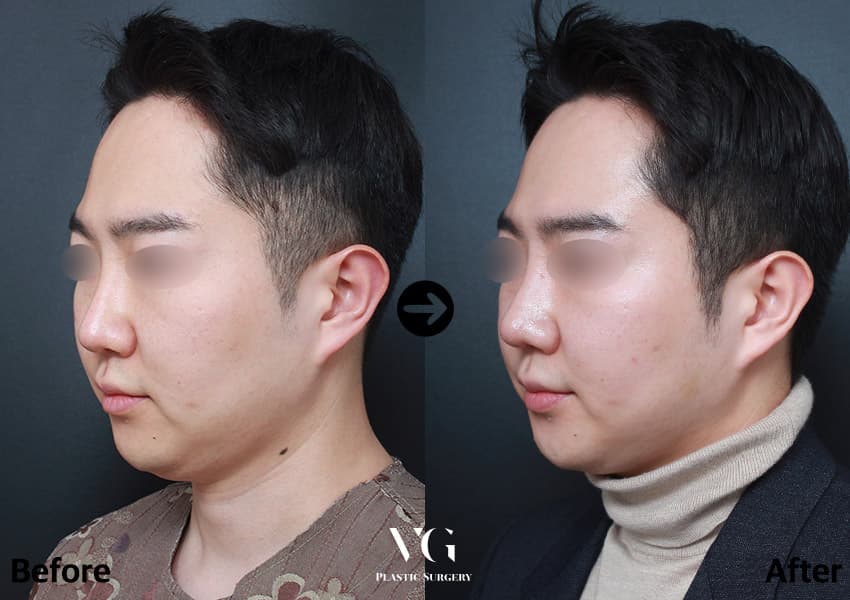
Male Rhinoplasty3 months after surgery
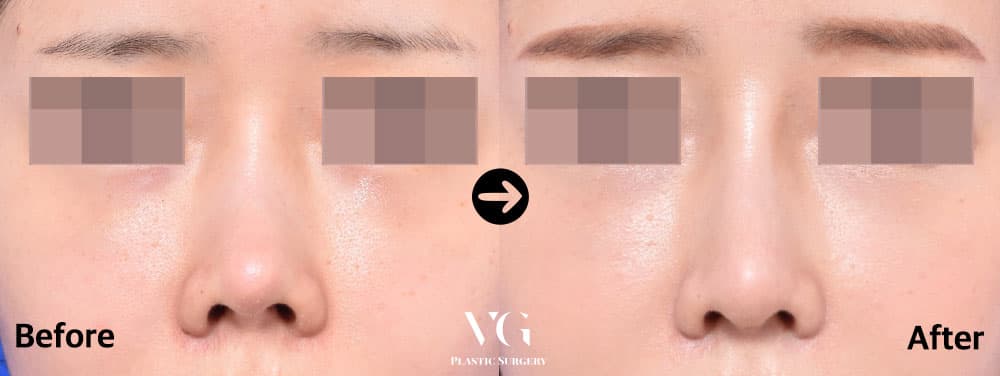
Revision Rhinoplasty3 months after surgery
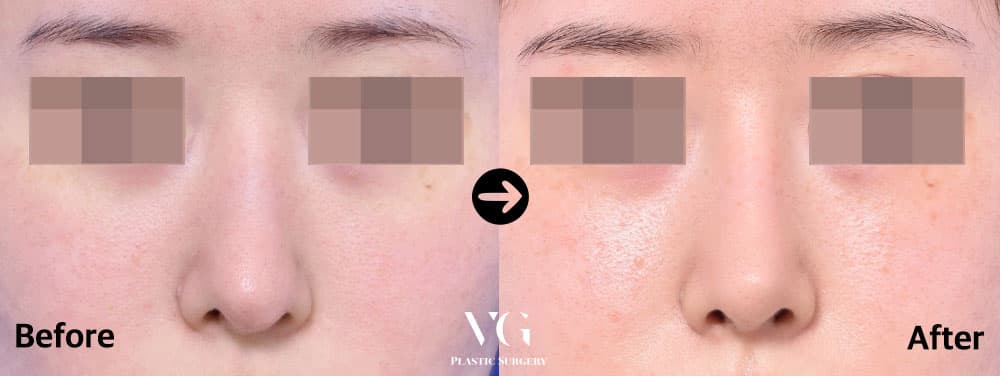
Revision Rhinoplasty3 months after surgery
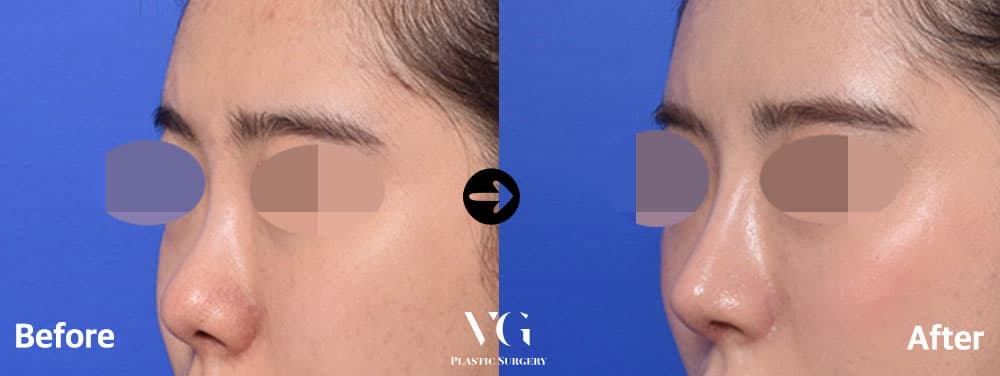
Rhinoplasty3 months after surgery
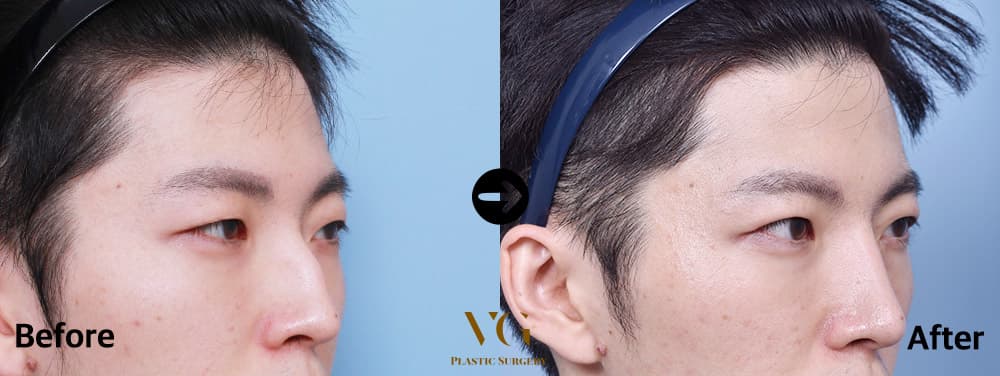
Male Rhinoplasty3 months after surgery
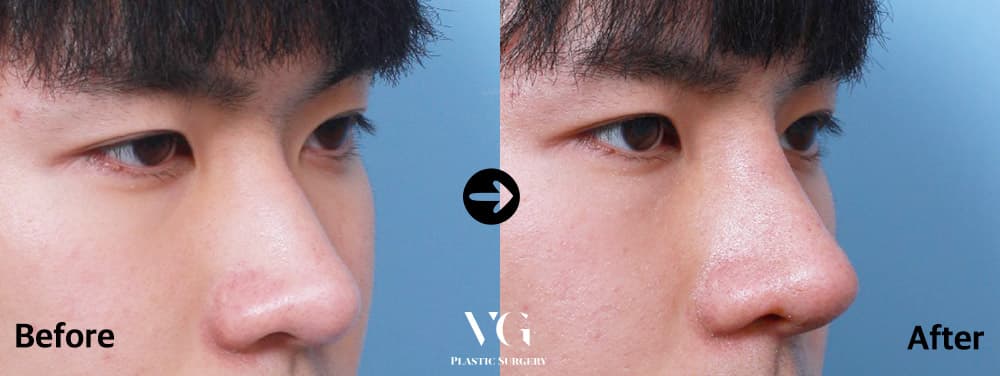
Male Rhinoplasty3 months after surgery
FAQ
Questions patients ask
How long should I stay in Seoul for a rhinoplasty?
As a general pattern, plan to remain through the splint week and a check-up before you fly, since surgeons commonly keep a splint on for around a week.
Can a surgeon in Korea work with thick skin and a wide nasal base?
Rhinoplasty surgeons plan around skin thickness and base width, and the medical literature on African American rhinoplasty discusses these features directly.
Who do I contact if I have a concern after flying home?
For urgent symptoms such as fever, spreading redness, worsening breathing or bleeding that will not stop, see a local doctor right away. For other questions, message the clinic on WhatsApp in English and bring your surgical summary to any local doctor.
When can I fly home after rhinoplasty?
Ask your surgeon at the pre-flight check. Long flights soon after surgery raise concerns such as blood clots, which the CDC flags for medical travel, so the date is decided after you have been examined.
What photos should I send first?
Send a straight-on view, a side profile and a view from below the nose, taken in daylight without makeup or filters. Add your travel dates and your one-sentence goal.
Sources
- Rhinoplasty: The African American Patient (Momoh AO, Hatef DA, Griffin A, Brissett AE. Seminars in Plastic Surgery, 2009;23(3):223-231)
- Current Update in Asian Rhinoplasty (Ishii CH, Plastic and Reconstructive Surgery Global Open, 2014;2(4):e133)
- Rhinoplasty recovery
- Rhinoplasty safety: risks
- Medical Tourism
This article explains general medical information. Whether surgery suits you, and which method, is decided only after a consultation with the surgeon.
Written by
Im Young Min
Chief Director · Plastic Surgery
- Ph.D. in Medicine
- Internship and residency, Seoul St. Mary's Hospital
- Board-certified plastic surgeon, Seoul St. Mary's Hospital
- Adjunct professor of plastic surgery, Seoul St. Mary's Hospital
- Former director, Topface Plastic Surgery
Next step
Send two photos. Get a surgeon’s answer.
Front and side, natural light, no filter. Dr. Im Young Min reviews them and tells you which method fits and how many days to stay in Seoul.
International patients pay the same surgical fee as Korean patients. Pricing policy
Keep reading
Nose
Rhinoplasty Cost in South Korea in Rupees: What Changes It for a Flat Nose or Crooked Septum? Reviews, Methods and Recovery
There's no honest rupee figure for a nose nobody has examined. The cost follows the method, septum work, revision, anesthesia time and days in Seoul; send photos on WhatsApp to ask about yours.
Im Young Min ·
Nose
What Decides the Cost of Rhinoplasty in South Korea? Reviews, Methods and Recovery
There is no single price for a nose job in Korea: the method, the cartilage source, septum work, revision status and anesthesia set the figure for your nose.
Im Young Min ·
Nose
How Much Does a Nose Job Cost in Korea? Four Cost Drivers, Reviews, Methods and Recovery
A nose job in Korea is priced from four parts: the scope of the change, the building material, any breathing work and the anesthesia. Foreigners pay the same surgical fee as Korean patients, with a written estimate.
Im Young Min ·